Every Streaming Service Price in 2026 — Complete Comparison
Updated March 2026 · 9 min read
This article is for informational purposes only and does not constitute financial advice. See our full disclaimer.
Streaming prices have risen across the board since 2020. Here's what every major service costs in 2026, comparing ad-supported and ad-free tiers side by side.
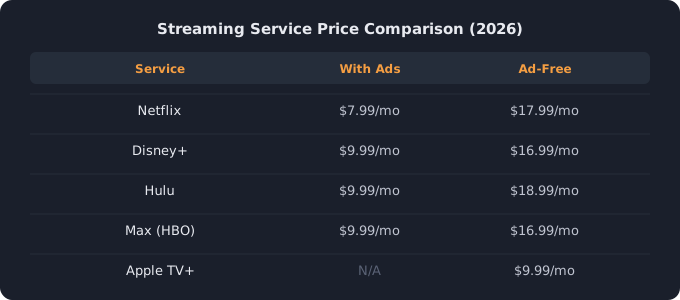
Video Streaming Prices (March 2026)
Netflix: With Ads $7.99/mo, Standard $17.99/mo, Premium $24.99/mo. Disney+: With Ads $9.99/mo, No Ads $16.99/mo, Premium $18.99/mo. Hulu: With Ads $9.99/mo, No Ads $18.99/mo. Max (HBO): With Ads $9.99/mo, Ad-Free $16.99/mo, Ultimate $20.99/mo. Amazon Prime Video: $8.99/mo standalone or $14.99/mo with Prime. Peacock: With Ads $7.99/mo, No Ads $13.99/mo. Paramount+: Essential $7.99/mo, With Showtime $12.99/mo. Apple TV+: $9.99/mo (no ad tier). YouTube Premium: $13.99/mo individual, $22.99/mo family.
Music Streaming Prices
Spotify: Free (with ads), Premium $12.99/mo, Family $19.99/mo. Apple Music: Individual $10.99/mo, Family $16.99/mo. YouTube Music: $10.99/mo (included with YouTube Premium). Amazon Music Unlimited: $9.99/mo or $8.99 for Prime members. Tidal: $10.99/mo HiFi.
Which Services Give You the Most Value?
Price alone does not tell the full story. The real question is what you get per dollar spent. Here is how the major services compare on content volume and original programming.
Netflix
Netflix maintains the largest content library among dedicated streaming platforms, with an estimated 7,000+ titles in the US. It also leads in original programming, releasing roughly 80–100 original films and series per year. For households that watch daily, Netflix's cost-per-hour of entertainment is among the lowest. The ad-supported tier at $7.99/month is one of the best deals in streaming if you do not mind occasional interruptions.
Disney+ / Hulu
Disney+ focuses on family content, Marvel, Star Wars, Pixar, and National Geographic — a narrower library of around 2,500 titles, but with extremely high-profile originals. Hulu fills the gap with current-season TV, next-day episodes from major networks, and a broader selection of general entertainment. Together, the two services cover a wider range than most competitors individually.
Max (HBO)
Max offers a smaller library (roughly 3,500 titles) but punches above its weight in prestige content. HBO originals, Warner Bros. films, and exclusive documentaries make it the go-to for viewers who prioritize quality over quantity. The Ultimate tier at $20.99/month is the most expensive mainstream option, but it includes 4K streaming and offline downloads that other services charge extra for.
Amazon Prime Video
Prime Video is hard to evaluate in isolation because it comes bundled with Amazon Prime shipping. If you already pay $14.99/month for Prime, the video content is essentially a bonus. The standalone $8.99/month option is competitive, and Amazon has been investing heavily in sports content and original series. The library sits around 5,000+ titles, though many premium titles require additional rental or purchase fees.
The Rotation Strategy
You do not need to subscribe to everything at once. The rotation strategy is simple: keep one primary service you watch consistently (for most households, this is Netflix or a bundled service), and rotate one secondary service on a monthly basis based on what you want to watch.
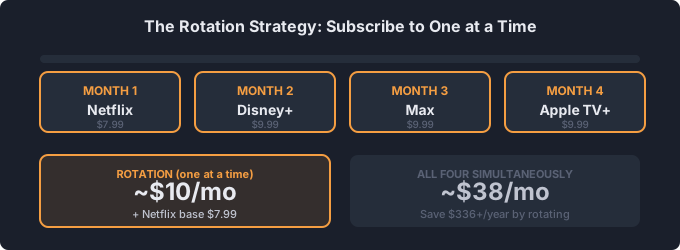
Here is how it works in practice. Say you keep Netflix year-round at $7.99/month (ad-supported). In January, you subscribe to Max for $9.99 to watch a new HBO series. In February, you switch to Disney+ for $9.99 to catch up on Marvel releases. In March, you try Paramount+ for $7.99 to watch a specific film. Your monthly cost stays between $16 and $18/month instead of the $55–$70/month you would pay subscribing to all four services simultaneously.
Over a full year, the rotation strategy saves $400–$600 compared to maintaining four or five active subscriptions. The key is canceling each rotated service before the next billing cycle and keeping a list of what you want to watch on each platform so you can binge efficiently during your subscription month.
Family Plans and Bundles
If you share an account with family members, family and bundle plans offer significant per-person savings. Here are the most impactful options in 2026.
Best Family Plans
Spotify Family covers up to 6 accounts for $19.99/month. Split across a household of 4, that is $5.00 per person vs $12.99 each — a savings of $383/year for the household. YouTube Premium Family at $22.99/month covers up to 5 members, working out to $4.60 per person vs $13.99 individual — saving the household up to $540/year. Apple One Family bundles Apple Music, TV+, Arcade, and 200GB iCloud for $22.95/month across 5 users, which replaces $40+ in individual subscriptions.
Best Bundle Deals
The Disney+/Hulu bundle with ads runs $10.99/month vs $19.98 for both separately — a savings of roughly $108/year. Adding ESPN+ to the bundle brings it to $15.99/month. For music and video together, the Apple One Individual plan at $19.95/month includes Apple Music, TV+, Arcade, and 50GB iCloud — cheaper than subscribing to Apple Music ($10.99) and TV+ ($9.99) separately.
Mobile carrier perks are another overlooked source of savings. T-Mobile Go5G Plus includes Netflix Standard with Ads. Verizon myPlan lets you add Disney+, Hulu, or Max for $10/month each as add-ons. Before paying full price for any streaming service, check whether your phone plan, internet provider, or credit card already includes it.
How to Save on Streaming
Use ad-supported tiers. Netflix with ads saves $10/month vs standard — that's $120/year. Across all your streaming services, switching to ad-supported plans can cut your total bill by 40–60%. The ad load on most platforms is 4–5 minutes per hour, significantly less than traditional cable TV.
Rotate services. Keep one primary, rotate a second monthly based on what you want to watch. This single habit is the biggest money-saver for most households.
Check bundled deals. Many phone carriers and ISPs include free streaming. The Disney+/Hulu bundle saves vs subscribing separately. Stack these with family plans for maximum savings.
Most people don't realize the total until they see it in one place. Three streaming services at ad-free prices easily runs $45–$60/month — that's $540–$720/year just on video content. Use the 50/30/20 budget calculator to see what percentage of your wants category goes to streaming.
Track all your streaming costs
Add your streaming subscriptions and see the true monthly and yearly total.
Open Free Subscription Tracker →Related tools
50/30/20 Budget Calculator — See what percentage of budget goes to streaming
Paycheck Budget Calculator — Allocate entertainment in your budget
Savings Goal Calculator — Redirect streaming savings toward a goal
Related guides
Subscription Costs in 2026 — Full breakdown beyond streaming
Subscription Audit Checklist — Find and cancel unused services