How Much Do Americans Spend on Subscriptions in 2026?
Updated March 2026 · 9 min read
This article is for informational purposes only and does not constitute financial advice. See our full disclaimer.
Subscription costs have climbed steadily since 2020, and in 2026, the numbers are sobering. The average American now pays for 4.5 digital subscriptions at a combined cost of roughly $84 per month — just over $1,000 per year. And most people underestimate their spending significantly.
If you subscribed to all 15 of the most popular digital services — including Netflix, Spotify, Microsoft 365, and Zoom — you'd be paying $237 per month, a 49% increase from $159 in 2020.
Where the Money Goes
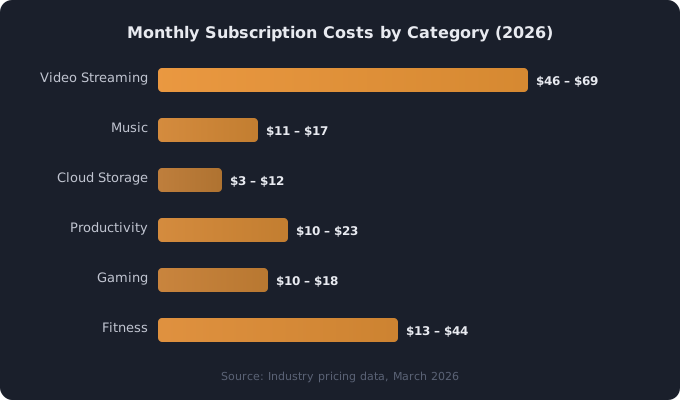
Streaming video remains the biggest expense, but it's far from the only category. Video streaming costs $46–$69/month for multiple services. Music streaming runs $11–$17. Cloud storage is $3–$12. Productivity tools like Microsoft 365 or Adobe cost $10–$23. Gaming subscriptions add $10–$18, and fitness apps run $13–$44.
The Biggest Price Increases Since 2020
Disney+ has seen the steepest increase — its ad-free plan rising 171.7% from $6.99 to $18.99. Netflix standard went from $12.99 to $17.99 (+38.5%). Spotify Premium climbed from $9.99 to $12.99 (+30%). Only iCloud+ and Dropbox have kept prices unchanged since 2020.
37% Have Canceled at Least One Subscription
Rising costs are driving real behavior changes. According to a 2026 survey, 37% of Americans have canceled at least one paid subscription in the past six months. Nearly half — 45% — say they believe they overspend on subscriptions. The most common reasons: price increases, not using the service enough, and finding free alternatives.
How to Know What You're Spending
The core problem is visibility. Charges are spread across multiple credit cards, billing dates, and app stores. The fix: write them all down in one place. You can use a spreadsheet, but a dedicated subscription tracker makes it easier — especially one that calculates totals, shows spending by category, and reminds you before renewals.
Subscription Spending by Generation
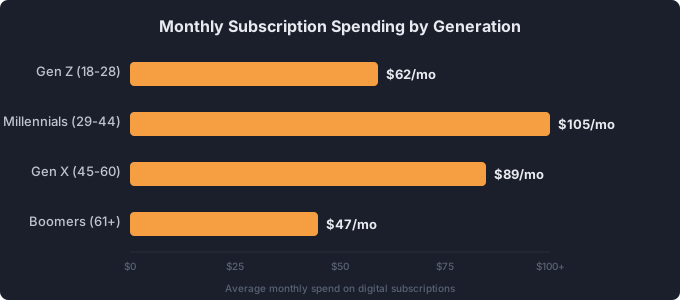
Not all age groups spend equally on subscriptions. Generational habits, income levels, and tech adoption rates create significant differences in monthly subscription bills.
Gen Z (Ages 18–28)
Gen Z subscribers tend to favor ad-supported tiers and free alternatives. On average, they spend around $62/month across 3.8 subscriptions. Their top categories are music streaming, gaming (Xbox Game Pass, PlayStation Plus), and video streaming. Many in this group share family plans with parents or roommates, which keeps individual costs lower. However, they are the most likely generation to subscribe to niche services — fitness apps, meditation apps, and creator platforms like Patreon.
Millennials (Ages 29–44)
Millennials are the heaviest subscription spenders, averaging $105/month across 5.4 subscriptions. This group stacks multiple streaming services, pays for productivity tools like Microsoft 365 or Notion, and is most likely to carry cloud storage subscriptions. Many also subscribe to meal kits, news outlets, and fitness platforms. Millennials are also the most likely to underestimate their spending — surveys show they guess their monthly total is around $65, missing the mark by nearly $40.
Gen X (Ages 45–60)
Gen X averages $89/month on 4.2 subscriptions. Their spending skews heavily toward premium streaming tiers (ad-free plans), cloud storage for family photos, and software licenses. This group is more likely to pay for antivirus subscriptions, VPN services, and professional software. They tend to cancel less frequently than younger generations, which can lead to higher long-term costs from services they no longer actively use.
Boomers (Ages 61+)
Boomers spend the least on digital subscriptions, averaging $47/month across 2.3 services. Video streaming dominates their spending, with many subscribing to just one or two services like Netflix and a cable-replacement option. Music streaming adoption in this group sits around 28%, compared to over 70% for Millennials. However, Boomers are more likely to maintain legacy subscriptions — magazine digital editions, newspaper paywalls, and satellite radio — that younger groups have largely abandoned.
Hidden Subscriptions Most People Forget
The subscriptions you know about are not the problem. It is the forgotten ones that quietly drain your account month after month. Here are the most commonly overlooked charges.
App Store Auto-Renewals
That photo editing app you downloaded for a vacation, the VPN you tried for one trip, or the language learning app you used for two weeks — these often convert from free trials to paid subscriptions without a noticeable notification. The average smartphone user has 2.4 app store subscriptions they have forgotten about, costing $8–$15/month combined. Check your Apple or Google subscription settings quarterly.
Free Trial Conversions
Companies count on you forgetting. Industry data shows that 48% of free trial users forget to cancel before the trial ends. At an average first charge of $12.99, that is a significant hit for a service you may never use again. Common offenders include streaming add-ons, premium app upgrades, and software tools that offer 7 or 14-day trials.
Annual Charges That Fly Under the Radar
Some subscriptions bill annually, making them easy to miss during a monthly review. Domain registrations ($12–$20/year), antivirus software ($30–$80/year), cloud storage upgrades ($24–$120/year), and professional memberships can total $150–$400 per year in charges you only see once. Set calendar reminders 2 weeks before each annual renewal so you can evaluate whether to continue.
5 Ways to Cut Costs
1. Audit everything. Check bank and credit card statements for the past 3 months. Look for charges between $2 and $20 — these small amounts are the easiest to miss and they add up fast. A typical audit uncovers $30–$50/month in forgotten or underused subscriptions.
2. Use the 2-3 service rule. Keep one primary streaming service you watch daily, and rotate a second service monthly based on new releases. This alone can save $20–$35/month compared to maintaining four or five streaming subscriptions simultaneously.
3. Switch to ad-supported plans. Netflix with ads costs $7.99 vs $17.99 for standard — that is a savings of $120/year on just one service. Apply this across Disney+, Hulu, and Max, and you could save $300–$400/year with minimal impact on your viewing experience.
4. Look for bundles. The Disney+/Hulu/ESPN+ bundle runs roughly $15.99/month with ads vs $27.97 for all three separately — a savings of about $144/year. Many mobile carriers also include streaming perks: T-Mobile offers Netflix, Verizon includes Disney+, and some plans bundle Apple TV+ at no extra cost.
5. Switch to annual billing. Most subscription services offer 15–20% discounts for annual payment. Spotify Premium drops from $12.99/month to an effective $10.83/month on annual billing. If you pay annually on three services, expect to save $40–$70/year.
The Subscription Fatigue Trend
Consumers are pushing back. The term "subscription fatigue" has entered the mainstream as people grow tired of managing dozens of recurring charges. In 2026, 62% of consumers say they feel overwhelmed by the number of subscriptions available, and 41% have actively reduced their total number of subscriptions in the past year.
This pushback is changing company behavior, too. Several major services have reintroduced lifetime purchase options or one-time payment alternatives. Others are offering more flexible pause-and-resume features instead of forcing full cancellation. The streaming industry in particular is seeing a rise in ad-supported free tiers as companies try to retain users who refuse to pay premium prices.
The smartest approach is intentional subscription management: know exactly what you are paying for, review it regularly, and cancel anything that does not deliver clear value relative to its cost. A subscription tracker makes this process automatic instead of relying on memory — which, as the data shows, is unreliable when it comes to recurring charges.
Track your subscriptions in 2 minutes
See exactly what you're spending. Free, no signup, no bank linking.
Open Free Subscription Tracker →Related tools
50/30/20 Budget Calculator — See how subscriptions fit your overall budget
Debt Payoff Calculator — Put subscription savings toward debt
Net Worth Calculator — See your full financial picture
Related guides
Subscription Audit Checklist — 15-min walkthrough to cut costs
Streaming Prices 2026 — Compare all streaming plans