How to Negotiate Lower Bills on Subscriptions and Services
Published April 2026 · 8 min read
This article is for informational purposes only and does not constitute financial advice. See our full disclaimer.
Most people pay full price for services they could get cheaper with a single phone call. Internet, cable, insurance, cell phone plans, and even streaming subscriptions are all negotiable — yet fewer than 20% of consumers ever try. The ones who do save an average of $50 to $100 per month, which adds up to $600 to $1,200 per year in money that was otherwise going straight to companies perfectly willing to charge you more than necessary.
The reason negotiation works is simple: it costs companies far more to acquire a new customer than to keep an existing one. Retention is the name of the game, and that gives you leverage every time a bill goes up or a promotional rate expires.
Which Bills Can You Negotiate?
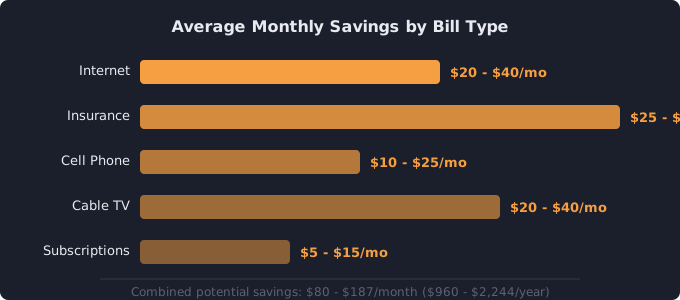
Not every bill is equally negotiable, but more are open to discussion than most people realize. Here are the most common candidates and typical savings ranges.
Internet and cable: These are the easiest bills to negotiate. Providers like Comcast, Spectrum, and AT&T routinely offer promotional rates to new customers while charging existing customers 30–50% more. A 10-minute call can often bring your bill back to the promotional price, saving $20–$40/month.
Cell phone plans: Carriers are fiercely competitive. If you mention a competitor's offer, your provider will frequently match or beat it. Savings of $10–$25/month are common, especially if you are on an older plan that has been replaced by a cheaper option.
Car and home insurance: Insurance companies adjust rates constantly. Calling to ask about discounts — bundling, safe driver, loyalty, or simply switching to a higher deductible — can save $300–$800 per year. Getting quotes from competitors and presenting them to your current insurer is one of the most effective negotiation tactics available.
Subscription services: Streaming platforms, gym memberships, software subscriptions, and meal kit services all have retention offers. When you call to cancel, you will often be offered a discounted rate, a free month, or a downgraded plan at a lower price. Savings vary but typically range from $5–$15/month per service.
Medical bills: Hospital and doctor bills are negotiable more often than people think. Many providers offer payment plans or discounts of 10–30% for paying in full or for demonstrating financial hardship.
When to Call for the Best Results
Timing matters. You will get the best results in these situations.
When your promotional rate expires. This is the single best time to call. Your bill just jumped, you have a clear reason to complain, and the company knows you are at high risk of leaving. Call within the first billing cycle after the increase.
After a price hike. When a company raises rates across the board, they expect a wave of cancellation calls. Retention teams are prepared with offers. Call within 30 days of the increase and reference the specific dollar amount your bill went up.
At the end of your contract. If you are month-to-month or approaching a contract renewal, you have maximum leverage. The company knows you can leave without penalty.
When competitors run promotions. If a rival service is advertising a better deal, screenshot it or write down the details. This gives you a concrete number to reference during your call.
What to Say: Proven Scripts That Work
You do not need to be a skilled negotiator. These simple, polite approaches work consistently.
The Direct Approach
Call and say: "Hi, I have been a customer for [X years] and I noticed my bill went up to [$amount]. I would like to stay, but that is more than I want to pay. What can you do to lower my rate?" This straightforward approach works because it signals loyalty while making your intention to leave implicit.
The Competitor Leverage
Call and say: "I have been looking at [competitor name] and they are offering [specific plan] for [$amount/month]. I would rather stay with you, but I need the price to be competitive. Can you match or beat that?" Having a real number from a real competitor makes this incredibly effective.
The Cancellation Route
Call and say: "I would like to cancel my service." You will almost always be transferred to a retention specialist whose entire job is to keep you. Once transferred, explain that cost is the issue. Retention agents have access to discounts and promotions that regular customer service representatives cannot offer. This method has the highest success rate but requires you to be prepared to actually cancel if they do not budge.
The Retention Department: Your Secret Weapon
When you call to cancel or threaten to leave, you get transferred to the retention department. These agents are specifically trained and authorized to offer discounts that regular customer service cannot. They typically have access to promotional rates 20–40% below standard pricing, loyalty credits applied as one-time or recurring discounts, plan downgrades that remove features you do not use, and free service upgrades like higher internet speeds at your current price.
The key is to be polite but firm. Retention agents respond to customers who are reasonable, specific about what they want, and clearly prepared to leave. Avoid being rude or making unrealistic demands — the person on the other end has discretion over what they offer you.
Success Rates and What to Expect
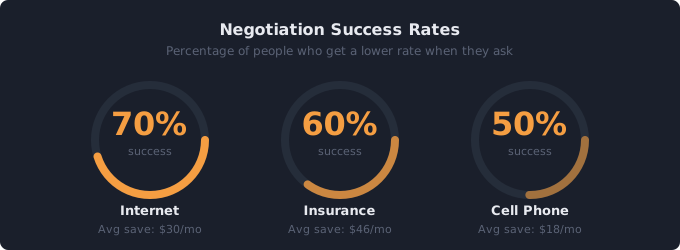
Negotiation works more often than not. Studies show that 70% of people who ask for a lower rate on their internet bill get one. For cable TV, the success rate is around 65%. Insurance negotiations succeed roughly 50% of the time, though the savings per success tend to be larger.
On average, a successful negotiation takes 15–30 minutes including hold time. If you negotiate three bills and save a combined $75/month, that is $900/year earned in under two hours of phone calls — an effective hourly rate of over $450.
If the first representative cannot help, politely ask to speak with a supervisor or call back another day. Different agents have different authorization levels, and persistence pays off. Some people report getting a better offer on their second or third call.
Apps and Services That Negotiate for You
If you dislike making phone calls, several services will negotiate on your behalf. Platforms like Rocket Money (formerly Truebill), Trim, and BillShark analyze your bills and handle the negotiation process entirely. They typically charge a percentage of the savings — usually 30–40% of the first year's savings — so you only pay if they succeed.
These services are most effective for cable, internet, and phone bills. They use the same tactics described above but at scale, and their success rates are comparable to doing it yourself. The tradeoff is straightforward: you save time but keep a smaller share of the savings.
For subscriptions specifically, start by auditing what you are paying with a subscription tracker before negotiating. Knowing your total monthly spend across all services gives you a clear picture of where the biggest savings opportunities are.
Make Negotiation a Regular Habit
The biggest mistake people make is negotiating once and never doing it again. Promotional rates expire, prices creep up, and new competitor offers emerge constantly. Set a reminder to review and negotiate your major bills every 6 to 12 months. Keep a simple log of what you are paying, when you last negotiated, and what rate you got.
Combine bill negotiation with a regular subscription audit and you can realistically cut $100–$200/month from your recurring expenses — money that can go toward savings, debt payoff, or anything more valuable than overpaying for services.
See all your subscriptions in one place
Track what you pay, spot waste, and know exactly which bills to negotiate first.
Open Free Subscription Tracker →Related tools
Subscription Tracker — Audit every recurring charge before you negotiate
50/30/20 Budget Calculator — See how lower bills improve your budget
Debt Payoff Calculator — Put your savings toward eliminating debt
Related guides
Subscription Audit Checklist — 15-min walkthrough to find hidden charges
Subscription Costs 2026 — How much Americans really spend